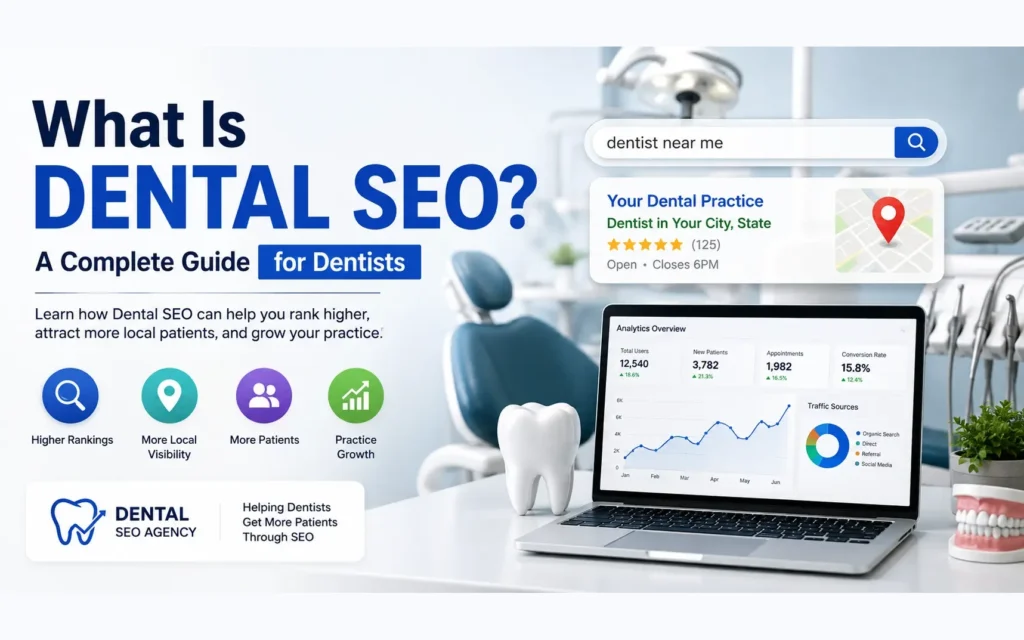
Dental SEO is one of the most effective ways for a dental practice to attract new patients through Google and other search engines. Instead of relying only on paid advertising, dental SEO helps your practice appear naturally when people search for services such as “dentist near me,” “dental implants,” “emergency dentist,” or “Invisalign dentist.”
For dentists, visibility in search results can directly influence how many potential patients discover, contact, and book with your practice.
In this guide, we’ll explain what dental SEO is, how it works, why it matters, and what dental practices can do to improve their search visibility.
What Is Dental SEO?
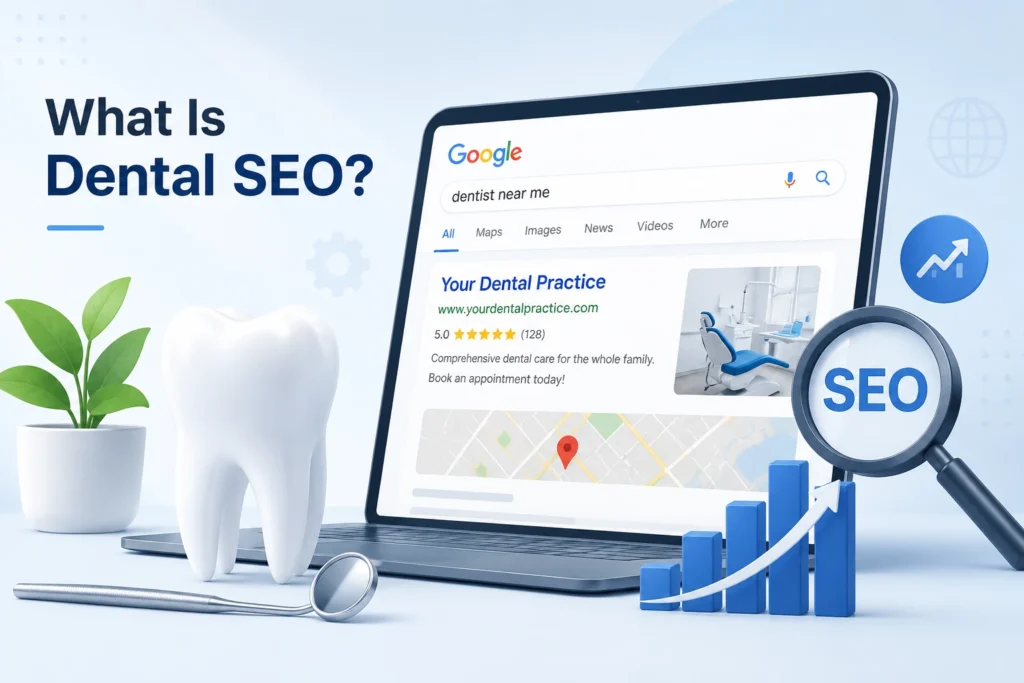
Dental SEO (Search Engine Optimization) is the process of improving a dental practice’s website and online presence so it can rank higher in search engine results for relevant dental-related searches.
The goal is simple:
Get your dental practice in front of more potential patients at the moment they’re searching for the services you provide.
For example, someone might search Google for:
- Dentist near me
- Best dentist in [city]
- Emergency dentist in [city]
- Dental implants in [city]
- Invisalign dentist near me
- Cosmetic dentist in [city]
- Teeth whitening near me
A strong dental SEO strategy helps your practice compete for these searches and turn organic search traffic into new patient opportunities.
Why Is SEO Important for Dentists?
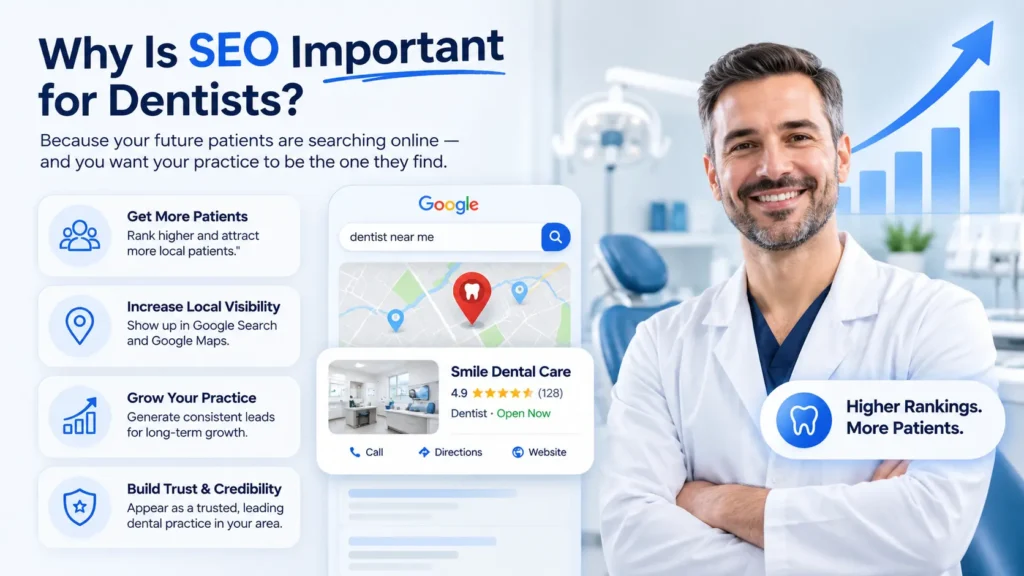
Most patients don’t choose a dentist completely at random. Before booking an appointment, they often search online, compare practices, read reviews, visit websites, and look for specific treatments.
If your practice doesn’t appear prominently when potential patients search, your competitors have an opportunity to capture those patients instead.
Dental SEO can help you:
- Increase organic website traffic
- Generate more dental leads
- Improve visibility in local search
- Appear in Google Maps
- Attract patients searching for specific treatments
- Build long-term online visibility
- Reduce reliance on paid advertising
- Establish greater credibility online
Unlike an advertisement, an organic search result can continue generating traffic after the initial SEO work has been completed.
How Does Dental SEO Work?
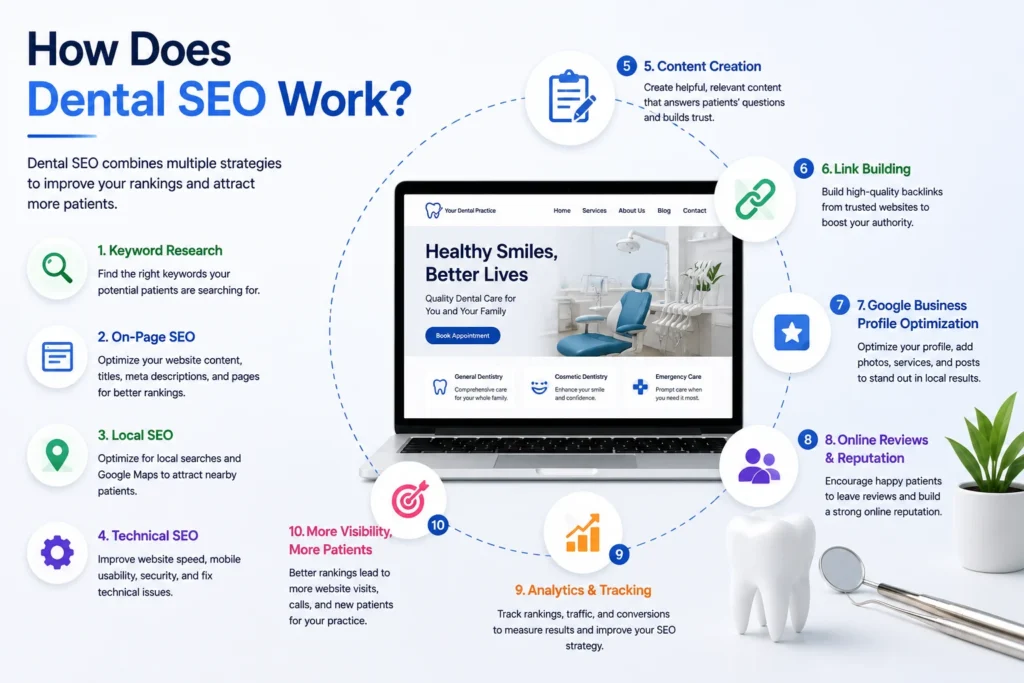
Dental SEO combines several different optimization strategies.
Google evaluates many factors when deciding which websites and businesses should appear for a particular search. Your SEO strategy should therefore address both your website and your local online presence.
The major components include:
1. Keyword Research
Keyword research identifies the terms potential patients use when searching for dental services.
Examples include:
- dentist near me
- dentist in Houston
- dental implants
- emergency dentist
- cosmetic dentist
- Invisalign dentist
- pediatric dentist
- teeth whitening
- root canal treatment
However, effective dental keyword research goes beyond finding keywords with high search volume.
You also need to understand search intent.
Someone searching for “what is a root canal” is probably researching a treatment.
Someone searching for “root canal dentist near me” may be ready to schedule an appointment.
A good SEO strategy targets both types of searches while prioritizing keywords that can generate qualified patients.
2. Local SEO
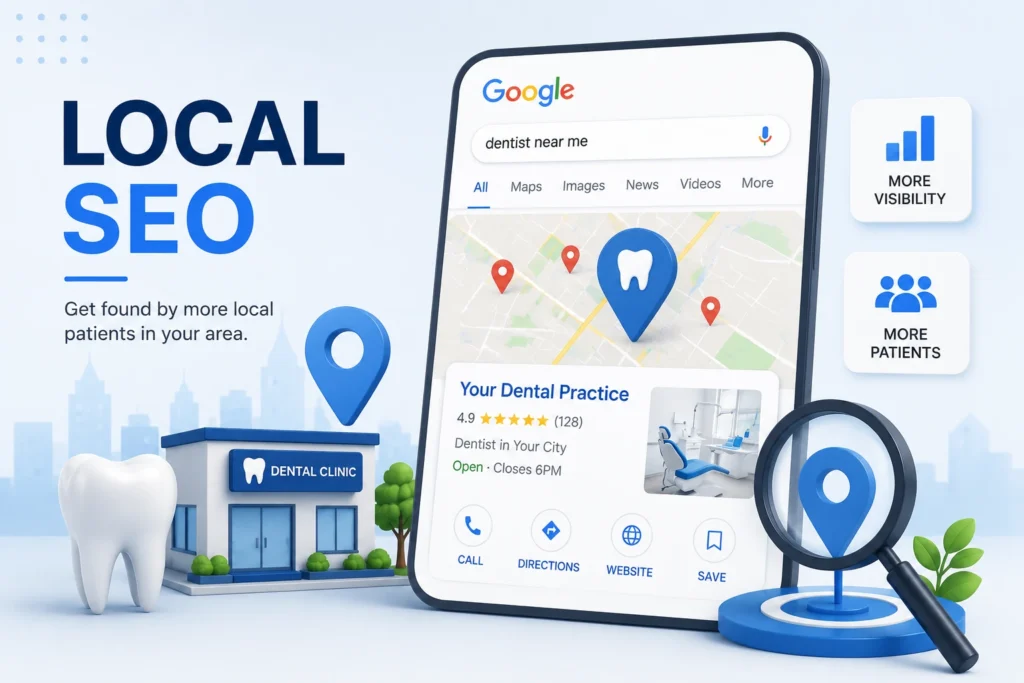
For most dental practices, local SEO is extremely important.
Patients typically want a dentist who is located conveniently near their home, workplace, or neighborhood.
Local SEO helps your practice appear for searches with local intent, including:
“dentist near me”
“dentist in [city]”
“emergency dentist near me”
“dental implants [city]”
A strong local SEO strategy can improve your visibility in Google’s local search results and Google Maps.
3. Google Business Profile Optimization
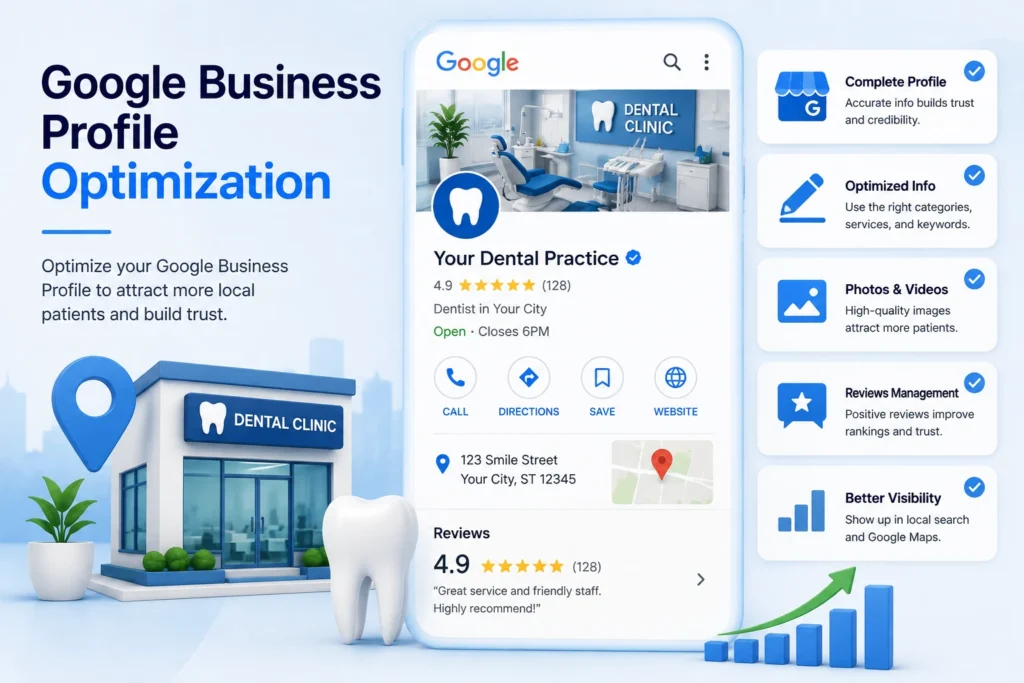
Your Google Business Profile is a major part of local dental SEO.
It can display information such as:
- Practice name
- Address
- Phone number
- Website
- Opening hours
- Services
- Photos
- Reviews
- Appointment information
An optimized profile gives Google and potential patients clearer information about your practice.
Keeping your business information accurate and consistent is essential.
Regularly adding appropriate photos, responding to reviews, maintaining accurate services and hours, and keeping your profile up to date can also improve the overall quality of your local presence.
4. Dental Website SEO
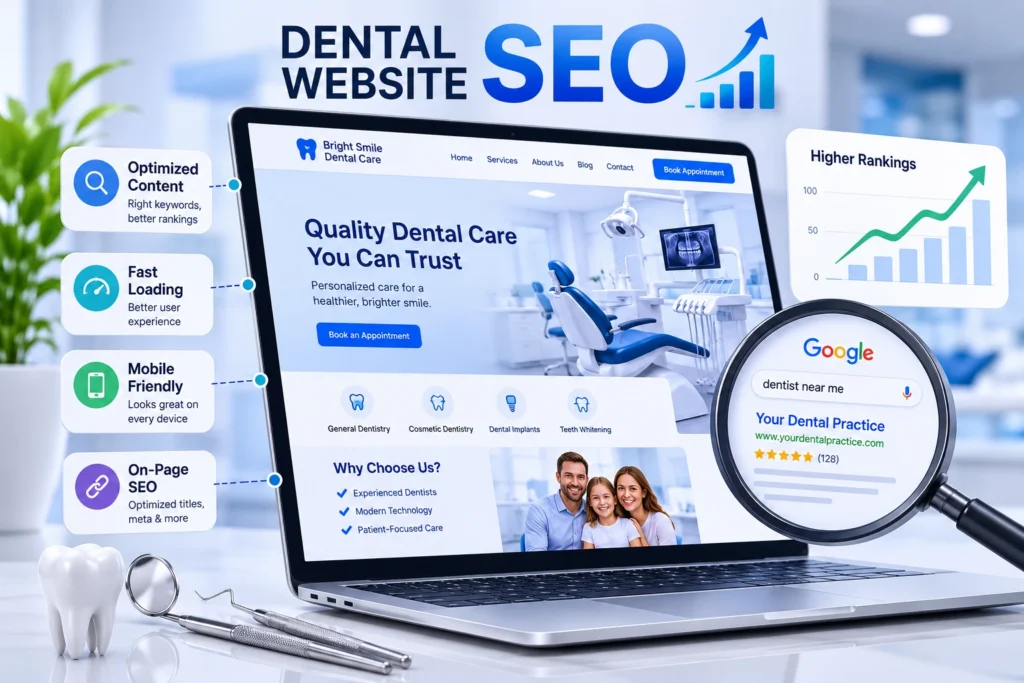
Your website is the foundation of your SEO strategy.
A dental website should be designed not only to look professional but also to be easy for search engines and patients to understand.
Important areas include:
Page Titles
Each important page should have a unique, descriptive title.
For example:
Dental Implants in Austin, TX | [Practice Name]
is generally more useful than:
Home | [Practice Name]
Meta Descriptions
Meta descriptions help communicate what a page is about in search results and can encourage users to click through to your website.
Headings
Proper H1, H2, and H3 headings help organize your content and make pages easier to understand.
URLs
Clean URLs can make your website structure easier for users and search engines to understand.
For example:
/dental-implants/
is clearer than:
/services/page?id=123
Internal Links
Internal linking connects related pages throughout your website.
For example, an article about missing teeth could link to your dental implant service page.
This helps users discover relevant information and helps search engines understand the relationships between pages on your site.
5. Dental Service Pages
One common mistake dental practices make is placing every service on one generic “Services” page.
Instead, important treatments should usually have dedicated pages.
For example:
- Dental Implants
- Invisalign
- Cosmetic Dentistry
- Emergency Dentistry
- Teeth Whitening
- Dental Crowns
- Root Canal Treatment
- Pediatric Dentistry
- Veneers
Each page gives your practice an opportunity to provide useful information and target relevant searches.
A strong service page should explain:
- What the treatment is
- Who it is for
- Benefits and considerations
- What patients can expect
- Frequently asked questions
- Why patients should consider your practice
- How to schedule a consultation
The content should be genuinely useful rather than simply created to insert keywords.
6. Location Pages
If your dental practice serves multiple locations, location pages can help you target different geographic markets.
For example:
- Dentist in Austin
- Dentist in Round Rock
- Dentist in Cedar Park
However, simply creating dozens of pages with nearly identical content is not a good SEO strategy.
Each location page should provide meaningful, location-specific information and genuinely help people in that area.
7. Dental Content Marketing
Blog content can help your dental practice attract people earlier in the patient journey.
For example, someone may search:
“How long do dental implants last?”
They aren’t necessarily ready to book immediately.
But a helpful article can introduce them to your practice.
You can then guide relevant visitors toward:
- Dental implant services
- Consultation pages
- Contact forms
- Appointment booking
- Other educational resources
Good dental content should answer real patient questions rather than exist simply to increase word count.
8. Online Reviews and Reputation
Reviews are important for local businesses, including dental practices.
Before choosing a dentist, many prospective patients look at reviews to understand other patients’ experiences.
Encourage genuine patients to leave honest reviews on appropriate platforms and respond professionally to reviews.
Never purchase fake reviews or create misleading testimonials.
Your online reputation should reflect the actual patient experience.
9. Technical SEO
Technical SEO focuses on the underlying structure and performance of your website.
Important areas include:
- Mobile responsiveness
- Website speed
- Core Web Vitals
- Crawlability
- Indexing
- XML sitemaps
- HTTPS
- Broken links
- Duplicate content
- Canonical URLs
- Structured data
- Website architecture
A website can have excellent content but still struggle if search engines cannot properly crawl, understand, or index its pages.
10. Dental Schema Markup
Structured data, commonly known as schema markup, helps search engines better understand information on your website.
Depending on the situation, dental practices may use relevant structured data to communicate information about:
- The business
- Location
- Services
- Organization
- Reviews
- FAQs
Schema does not guarantee higher rankings, but it can help search engines interpret your content more effectively and may support enhanced search-result features when eligible.
11. Link Building for Dental Websites
Links from other reputable websites can help establish authority and relevance.
For dental practices, potential opportunities may include:
- Local business organizations
- Professional associations
- Community organizations
- Local publications
- Healthcare resources
- Dental-related publications
- Community sponsorships
The goal shouldn’t be to obtain as many links as possible.
Instead, focus on earning relevant, legitimate, high-quality links.
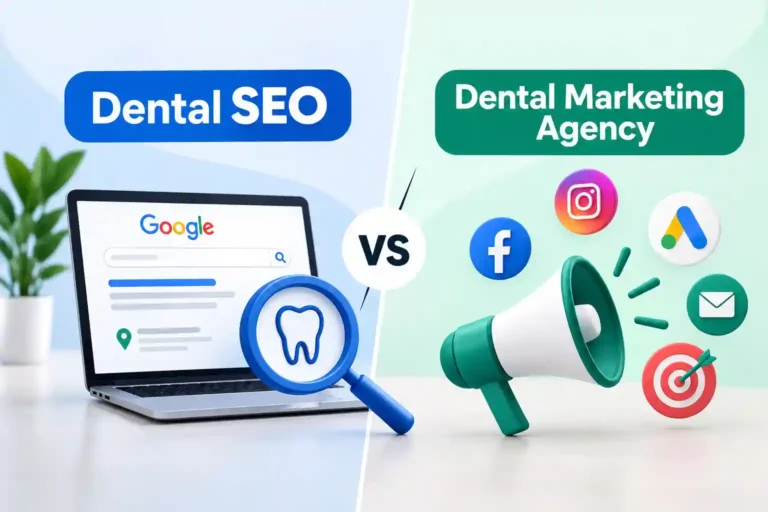
Dental SEO vs. Google Ads
Dental SEO and Google Ads can both generate patients, but they work differently.
Google Ads provides paid visibility. You pay when users interact with your advertisements according to your campaign settings.
SEO focuses on earning organic visibility in search results.
A simple way to think about it:
Google Ads = paid traffic
SEO = organic visibility
For many dental practices, using both can make sense.
Paid search can help generate visibility quickly, while SEO can build a stronger long-term organic presence.
How Long Does Dental SEO Take?
One of the most common questions dentists ask is:
“How long will it take to rank?”
There isn’t a universal answer.
SEO results depend on factors such as:
- Website age
- Existing authority
- Competition
- Location
- Target keywords
- Website quality
- Content quality
- Backlink profile
- Technical SEO
- Local search competition
- Consistency of SEO work
A new dental website competing in a major city for highly competitive keywords will generally face a different challenge than an established practice in a smaller market.
It’s better to think of SEO as a long-term growth strategy, rather than a quick advertising campaign.
How Much Does Dental SEO Cost?
Dental SEO pricing varies significantly depending on the practice and the scope of work.
Factors that influence cost include:
- Number of locations
- Competition
- Number of services
- Website size
- Technical requirements
- Content requirements
- Local SEO work
- Link-building strategy
- Current search visibility
- Monthly SEO workload
Instead of choosing an SEO provider solely based on the lowest monthly price, dental practices should evaluate what is actually included in the service.
How Do You Measure Dental SEO Success?
Traffic alone isn’t enough.
A successful dental SEO campaign should ultimately contribute to business growth.
Important metrics include:
Organic Traffic
How many visitors are arriving through unpaid search results?
Keyword Rankings
Are important commercial and local keywords improving?
Google Maps Visibility
Is the practice appearing more frequently in local search results?
Leads
How many calls, forms, consultation requests, or other inquiries are coming from organic search?
New Patients
How many actual new patients can be attributed to your marketing efforts?
Conversion Rate
What percentage of organic visitors take a valuable action?
Return on Investment
Does the revenue generated justify the investment in SEO?
The most important question isn’t:
“How much traffic did we get?”
It’s:
“Did SEO help us generate more qualified patient opportunities?”
Common Dental SEO Mistakes
Dental practices often make several SEO mistakes.
1. Targeting Only “Dentist”
The keyword “dentist” is extremely broad.
Local and treatment-specific searches can often provide much more meaningful opportunities.
2. Creating Thin Service Pages
A page with a few paragraphs and a list of keywords is unlikely to provide a great patient experience.
3. Ignoring Google Maps
A dental practice can have a beautiful website but still miss significant local visibility if its local SEO presence is neglected.
4. Using Duplicate Location Pages
Creating dozens of nearly identical location pages can create a poor user experience and may not provide meaningful search value.
5. Buying Low-Quality Backlinks
Cheap link packages can create more risk than value.
6. Focusing Only on Rankings
Higher rankings are useful, but they aren’t the final business goal.
7. Neglecting Mobile Users
A significant portion of local searches happen on mobile devices. Your website needs to work well on phones.
What Does a Dental SEO Strategy Look Like?
A comprehensive dental SEO campaign might follow this process:
Step 1: SEO Audit
Analyze the current website, technical SEO, content, local presence, backlinks, and competitors.
Step 2: Keyword Research
Identify valuable dental, treatment, and location-based searches.
Step 3: Competitor Research
Analyze which keywords, pages, links, and local strategies are helping competing practices perform well.
Step 4: Website Optimization
Improve technical SEO, page structure, metadata, internal linking, and user experience.
Step 5: Service Page Optimization
Build or improve dedicated pages for important treatments.
Step 6: Local SEO
Optimize the practice’s local search presence and Google Business Profile.
Step 7: Content Development
Publish useful, patient-focused content around relevant topics.
Step 8: Authority Building
Earn relevant links and strengthen the practice’s online authority.
Step 9: Tracking & Reporting
Monitor rankings, organic traffic, leads, calls, and other meaningful KPIs.
Step 10: Continuous Optimization
SEO isn’t a “set it and forget it” strategy. Continue improving based on search performance, competition, and changes in search behavior.
Is Dental SEO Worth It?
For many dental practices, SEO can be a valuable long-term marketing investment.
People are already searching online for dentists and dental treatments. The opportunity is to make sure your practice is visible when those searches happen.
A successful dental SEO strategy combines:
Technical SEO + Local SEO + Content + Service Pages + Reputation + Authority + Conversion Optimization
The result isn’t simply more website visitors.
The objective is to create a stronger online presence that helps your practice attract qualified local patients and turn search visibility into real business opportunities.
Final Thoughts
Dental SEO is much more than adding keywords to a dental website.
It’s a comprehensive strategy designed to improve your practice’s visibility across Google, Maps, and organic search while providing potential patients with useful information that helps them make confident decisions.
Whether you’re launching a new dental practice, trying to increase new-patient appointments, or competing against established practices in your area, a well-planned SEO strategy can become an important part of your long-term growth.
Want to improve your dental practice’s visibility on Google? Dental SEO Agency can help develop a customized SEO strategy focused specifically on dental practices, local search visibility, qualified traffic, and patient growth.