
Dental implants are one of the most profitable procedures a practice offers, which also makes them one of the most competitive keywords to rank for. Patients researching implants search extensively before booking a consultation, comparing practices, prices, and reviews along the way. If your practice isn’t visible during that research phase, you’re losing high-value patients to competitors who show up first. That’s exactly the problem dental implant SEO is built to solve.
This guide covers why implant SEO deserves its own strategy separate from general dental SEO, what actually goes into ranking for implant-related searches, and how to know if your current content is working
Why Dental Implants Need Their Own SEO Strategy
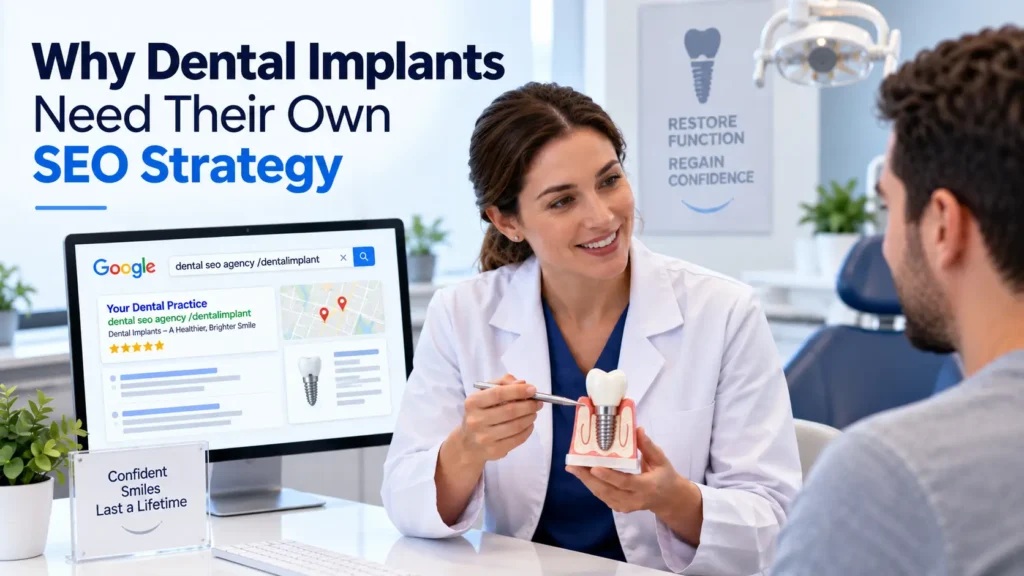
Implant patients behave differently than patients searching for routine care like cleanings or checkups. A general dental SEO plan often treats all procedures the same way, but implants involve:
- Longer research cycles — patients often spend weeks comparing options before contacting a practice
- Higher-intent, higher-competition keywords like “dental implants near me,” “full mouth dental implants cost,” or “same day dental implants”
- Price-sensitive searches — many patients search for cost information before anything else
- Trust-heavy decision-making — implants are a significant investment, so before/after photos, credentials, and reviews matter more here than for routine procedures
Because of this, implant pages need to be treated as their own dedicated SEO asset, not folded into a general “services” page.
If you’re still getting familiar with the fundamentals, our guide on what dental SEO is is a good place to start before applying these implant-specific tactics.
Core Elements of a Strong Dental Implant SEO Strategy
To rank competitively for implant searches, your strategy typically needs to include:
- A dedicated, in-depth implant service page — not a paragraph buried inside a general services list
- Keyword targeting for procedure variations — single implants, full mouth implants, implant-supported dentures, All-on-4, and similar terms patients actually search
- Cost and financing content — pages or sections addressing pricing ranges and financing options directly, since cost is one of the top implant-related searches
- Before/after photo galleries with proper image optimization and alt text
- Patient reviews and testimonials specific to implant procedures, not just general practice reviews
- Schema markup for medical procedures and FAQs, helping your implant page qualify for rich results
- Local SEO signals tied to implant searches, since most patients still search “near me” even for high-value procedures
How Implant SEO Differs From General Dental SEO

A general dental SEO agency will optimize your site broadly, but a strategy focused on high-value procedures like implants requires deeper, more targeted work. This is one of the clearest examples of why choosing an SEO agency specializing in dental practices makes a measurable difference specialized agencies already understand implant search behavior, pricing objections, and the trust signals patients look for before booking a consultation.
The difference typically shows up in three areas:
- Content depth — implant pages need FAQs, cost breakdowns, and procedure explanations that go far beyond a short service description.
- Conversion-focused design — clear calls to action for consultations, since implant patients often need one more nudge before booking.
- Competitive analysis — understanding what top-ranking implant pages in your area are doing differently, then building content that outperforms them.
Common Implant SEO Mistakes to Avoid
- Treating implants as just another line item on a general services page instead of a standalone page
- Ignoring cost-related searches out of hesitation to discuss pricing publicly
- Using generic stock photos instead of real before/after results (with patient consent)
- Skipping local optimization, assuming implant patients will travel farther without confirming it in your area
- Not tracking implant-specific conversions, making it hard to know if your SEO investment is actually generating consultations
How to Know If Your Implant SEO Is Working

Track these metrics specifically for your implant page, not just site-wide numbers:
- Rankings for implant-related keywords in your service area
- Organic traffic landing specifically on your implant page
- Consultation requests or calls generated from that page
- Time on page and scroll depth, which indicate whether visitors are actually reading your content
If these numbers are flat or you don’t have visibility into them at all, it’s a sign your implant content needs a dedicated review.
Final Thoughts
Dental implants represent some of the highest-value patients a practice can attract, but only if they can find you during their research phase. A focused dental implant SEO strategy built around procedure-specific keywords, cost transparency, and trust-building content gives your practice a real shot at capturing those patients before a competitor does.
If you’re not sure how your current implant page compares to competitors in your area, a free SEO audit is the fastest way to find out where the opportunities are.